A developer on the west side of Springfield encountered unexpected fill when cutting back a slope for a new commercial pad. The site sat near an old tributary of the Sangamon River, and the exposed material was a mix of loess and construction debris. Our team mobilized within three days to log the cut, run laboratory shear tests, and complete a slope stability analysis that redesigned the grading plan without delaying the project. Springfield’s terrain looks flat at first glance, but creek valleys and man-made fills hide plenty of surprises. The city sits at about 580 feet above sea level on glacial till and wind-blown loess, and these soils lose strength fast when wet. We combine local drilling knowledge with limit-equilibrium modeling to catch problems before they turn into slide failures. For deeper profiles we sometimes pair the stability work with an spt drilling program to get blow counts where refusal is shallow.
Springfield loess can lose 60 percent of its shear strength when saturated. That is why we never assume a single groundwater condition in our models.
Service characteristics in Springfield Illinois
Local geotechnical conditions in Springfield Illinois
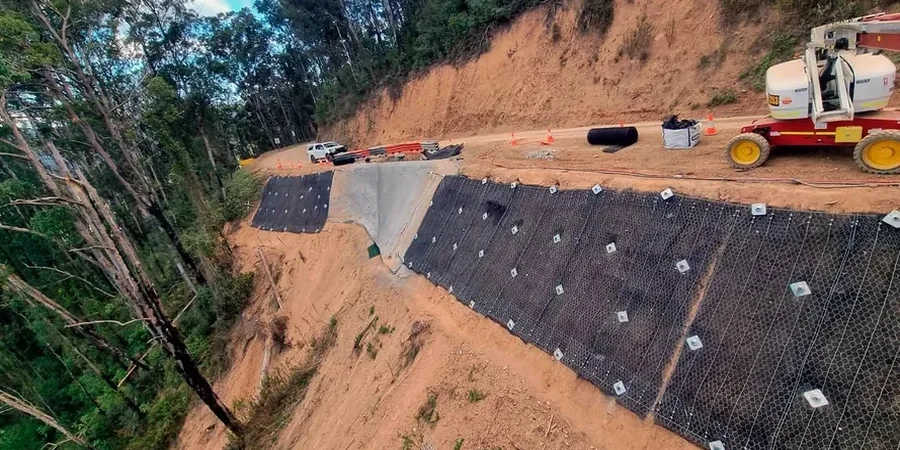
One pattern we see repeatedly in Springfield: a homeowner cuts into a gentle slope to gain backyard space, leaves the cut nearly vertical, and within two years the face starts raveling after a wet cycle. Loess does not give much warning. A small tension crack at the top turns into a rotational slide that takes out fences, patios, and sometimes part of the foundation. Commercial sites face bigger liability. An unanalyzed slope above a detention basin or a retaining wall can fail during construction, triggering OSHA stop-work orders and expensive redesigns. The Sangamon River bluffs east of town add another layer of risk because they are steep enough for deep-seated failures. We run rapid-drawdown scenarios on any slope that borders a pond or creek, because the sudden drop in water level after a storm removes the stabilizing force on the face. A thorough slope stability analysis eliminates the guesswork and gives the contractor a clear set of safe slope angles.
Our services
Our slope stability work in Springfield covers both natural terrain and engineered earthworks. Every job includes field reconnaissance, laboratory testing on Shelby-tube or bulk samples, and a stamped report with clear recommendations.
Natural slope and bluff assessment
We evaluate existing slopes along the Sangamon River, Lake Springfield shoreline, and tributary creeks. Scope includes geologic mapping, soil borings, laboratory shear testing, and stability modeling for long-term and seismic conditions.
Cut and fill slope design
For new commercial pads, roadway embankments, and residential grading we design safe slope angles, bench configurations, and drainage systems. We also analyze temporary construction slopes to meet OSHA requirements.
Questions and answers
How much does a slope stability analysis cost in Springfield?
The cost depends on the slope height, site access, and number of borings. For a typical residential or light commercial slope in the Springfield area, the analysis ranges from US$1.140 to US$4.370. This includes field investigation, laboratory testing, computer modeling, and a stamped report.
When does the IBC require a slope stability analysis?
IBC Chapter 18 requires a geotechnical investigation for any structure supported on or near a slope. The analysis becomes mandatory when the slope is steeper than 2 horizontal to 1 vertical, when the building is within a defined setback from the crest or toe, or when evidence of prior instability exists. Our reports directly address these code triggers.
What soil parameters do you use for Springfield loess?
We run direct shear and triaxial tests on undisturbed Shelby-tube samples. For Springfield loess, we typically see drained friction angles between 26 and 32 degrees with cohesion intercepts of 100 to 300 psf at natural moisture. Saturated values drop significantly, so we always model both drained and undrained cases.