Springfield's expansion from a frontier settlement to the state capital brought construction onto the broad floodplain of the Sangamon River, where the subsurface tells a story of glacial outwash and post-glacial lake deposits. In our laboratory, we see the consequences of building on these soft, compressible clays every week when samples arrive from downtown projects and the developing southwest corridor. Foundation performance here depends less on textbook formulas and more on how well the design accounts for the specific stratigraphy found beneath each block. A CPT test can map the transition from stiff desiccated crust to normally consolidated clay in real time, while grain-size analysis confirms whether the bearing stratum has enough coarse fraction to limit long-term settlement.
Springfield's lacustrine clays demand raft designs where subgrade modulus is measured, not assumed from generic tables.
Service characteristics in Springfield Illinois
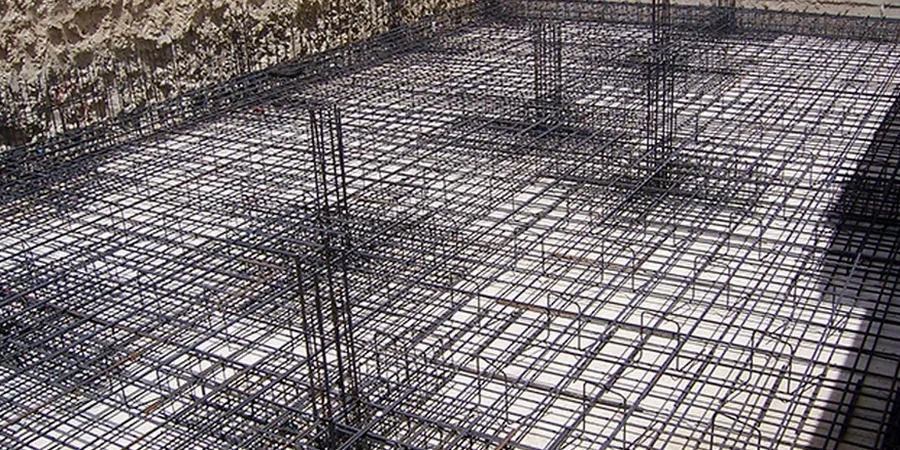
Local geotechnical conditions in Springfield Illinois
ASCE 7 and the IBC, as adopted by the City of Springfield, require that foundation systems on potentially compressible soils be designed for total and differential settlement limits appropriate to the structure type. In Springfield, the risk is not dramatic bearing failure—the clays have adequate strength for moderate loads—but excessive differential settlement that distorts slab-on-grade floors and cracks partition walls. We have pulled Shelby tube samples from sites near Lake Springfield where organic silt lenses went undetected in standard borings, only to show up in consolidation curves as a secondary compression tail that added half an inch of settlement over ten years. A raft designed without that data would have performed poorly. The solution involves sampling at close vertical intervals through the upper fifteen feet, running one-dimensional consolidation tests on representative specimens, and modeling the raft-soil interaction under the actual column layout rather than using a uniform pressure assumption.
Our services
Our laboratory and field team supports Springfield raft foundation projects with a sequence that starts in the ground and finishes at the computer model. We handle the boring layout, sampling, lab program, and the geotechnical parameter report that the structural engineer needs for soil-structure interaction analysis.
Site Characterization for Raft Design
Rotary wash borings with SPT and thin-wall Shelby tube sampling through the Equality Formation clays and into the underlying till, logged by a geologist familiar with Springfield's Quaternary stratigraphy.
Consolidation and Strength Testing
One-dimensional consolidation tests at incremental loads to define compression index, recompression ratio, and preconsolidation pressure, plus unconfined compression and triaxial tests for undrained shear strength.
Subgrade Modulus Recommendation
Integration of lab consolidation curves with CPT tip resistance profiles to produce a depth-dependent modulus of subgrade reaction that reflects actual layering, not a single uniform value.
Questions and answers
When does a Springfield project need a raft/mat foundation instead of isolated footings?
When the structural load exceeds the bearing capacity of shallow footings on the soft Equality Formation clays, or when differential settlement between columns would exceed the half-inch tolerance typical for framed structures. Rafts are also justified when the water table is high—common along the Sangamon River corridor—making deep excavations for strip footings impractical.
What is the cost range for a raft foundation design study in Springfield?
For a typical commercial building in Springfield, the geotechnical investigation and lab testing program that supports a raft design usually runs between US$1,160 and US$4,210, depending on the number of borings, the depth of exploration, and the consolidation testing required by the structural engineer.
How deep must a raft be placed to avoid freeze-thaw problems in Springfield?
The IBC prescribes a minimum depth of 36 inches for foundations in this climate zone, but we typically recommend four feet or more in Springfield to get below the zone of seasonal moisture fluctuation in the high-plasticity clays. This also places the bearing surface in soil that maintains more consistent strength year-round.
What lab tests are essential for a Springfield raft foundation design?
At minimum, we run Atterberg limits on every distinct clay layer to classify the soil, one-dimensional consolidation tests on Shelby tube samples from the proposed bearing depth, and unconfined compression or triaxial tests for undrained shear strength. If the load pattern includes large point loads, we may add consolidation tests at multiple depths to capture the full compressible profile.
How does the Sangamon River floodplain affect raft design in downtown Springfield?
The floodplain deposits include interbedded silts, clays, and occasional sand lenses that create a highly variable compressibility profile over short distances. We address this by spacing borings closer together—often 50 to 75 feet—and by running consolidation tests on samples from each boring so the structural engineer can model the actual differential stiffness, not an average.