A seismic microzonation campaign in Springfield runs on geophones and a 24‑channel seismograph, typically a Geometrics Geode paired with 4.5 Hz vertical sensors. The crew lays out spreads along Sangamon Avenue or near the historic Illinois State Fairgrounds, recording ambient vibrations and active shots to map the shear‑wave velocity structure below the glacial till. This is not a generic desktop study: the equipment must resolve subtle impedance contrasts in the buried bedrock valleys that cross Sangamon County. Springfield sits at approximately 39.75° N latitude, where the New Madrid Seismic Zone still influences long‑period motion, though most local shaking comes from the Wabash Valley system. Combining the MASW lines with CPT soundings that reach the weathered shale gives us a calibrated Vs30 and site period map directly usable in IBC Chapter 16 structural analysis.
A single Vs30 value at the building pad won't capture lateral variation; a microzonation grid spaced at 50–100 m across Springfield reveals where site class boundaries cut through the parcel.
Service characteristics in Springfield Illinois
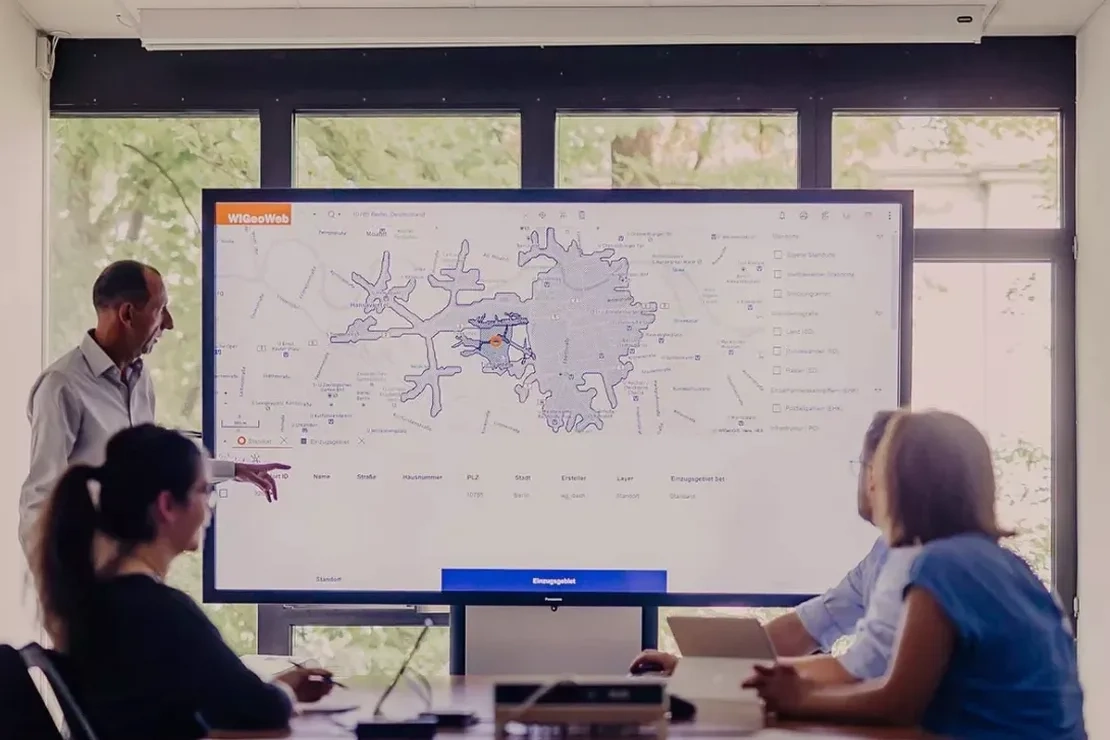
Local geotechnical conditions in Springfield Illinois
In Springfield, we often see foundation reports that cite a single boring with Vs30 = 220 m/s near 9th Street while the southwest corner of the same lot, 40 m away, sits on 6 m of soft alluvium with Vs30 = 170 m/s. The difference pushes the site from Class D into Class E, doubling the design spectral acceleration at short periods under IBC Table 1613.2.5. Contractors who skip the microzonation step end up with a structural design that underestimates base shear on one wing of the building, a liability that emerges during plan review or, worse, after an event from the Wabash Valley. A grid‑based approach also catches isolated peat pockets or buried channel sands that a conventional geotechnical investigation might miss between borings; mapping them before construction avoids expensive change orders and underpinning.
Our services
A microzonation study in central Illinois combines surface geophysics, intrusive verification, and engineering analysis. The four service blocks below outline the core components we deliver for projects ranging from hospital expansions to solar farms around Springfield.
MASW & ReMi Acquisition
Active and passive surface‑wave arrays deployed on paved and grass surfaces across the site; dispersion curves inverted to 1D Vs profiles with misfit below 5%.
Downhole & Crosshole Verification
Borehole seismic testing at 1.5 m intervals using a triaxial geophone and shear‑beam source, providing ground truth for the surface‑wave model at key boring locations.
Vs30 & Site Class Mapping
Gridded Vs30 contours and ASCE 7 site class polygons delivered as shapefiles and CAD overlays, with T0 and NEHRP amplification factors computed per IBC Chapter 16.
Liquefaction & Ground Failure Screening
Cyclic stress ratio versus cyclic resistance ratio analysis for the design earthquake, incorporating fines content from SPT and CPT data to flag zones requiring densification or stone columns.
Questions and answers
How much does a seismic microzonation study cost for a typical commercial lot in Springfield?
For a standard commercial parcel between 1 and 5 acres in Springfield, the study typically ranges from US$4,030 to US$18,120. The final figure depends on grid density, number of MASW lines, and how many verification borings or CPT soundings are required to satisfy the local building department's peer review threshold.
Does the City of Springfield building department require a site‑specific ground motion study?
Springfield follows the Illinois Building Code, which adopts IBC Chapter 16 with state amendments. A site‑specific study is triggered when the default site class is E or F, or when the structure is Risk Category III or IV and located within 5 km of a mapped fault. Even for Class D sites, many structural engineers request a microzonation to justify design spectra reduction under ASCE 7 Section 11.4.8.
How long does fieldwork take for a microzonation survey in Springfield?
For a 3‑acre site with 50 m grid spacing, active MASW acquisition and any passive recordings usually take two to three field days, assuming normal weather and no major traffic disruptions. Verification boreholes with downhole seismic add one day per hole. The full report with Vs30 maps and site class boundaries is typically delivered within three to four weeks after fieldwork wraps up.
What is the difference between a seismic microzonation and a standard geotechnical investigation?
A standard geotechnical investigation classifies the site based on one or two borings, often using SPT N‑value correlations to estimate Vs30. A microzonation maps the spatial variation of shear‑wave velocity, fundamental period, and amplification across the entire parcel, so that the structural engineer sees where site class boundaries cross the foundation footprint. This spatial coverage is essential for irregular footprints, additions, or sites with known alluvial channels. More info.