The International Building Code (IBC) and ASTM D1586 set the standard for geotechnical investigations, but in Springfield, Illinois, the real value of an SPT test lies in how it interprets the city's complex glacial history. The Illinois State Geological Survey maps show Springfield sitting on a mantle of Peoria Silt—loess deposits that can reach 15 feet thick—underlain by Illinoian glacial till. When a structural engineer designs a foundation near the Sangamon River floodplain or up on the Springfield Moraine, the blow counts from a standard penetration test offer the critical link between laboratory classification and field performance. Our team runs SPT rigs across Sangamon County year-round, correlating N-values with the stiff clay layers and intermittent sand lenses that define the local subsurface. For projects requiring deeper refusal data, we often pair SPT drilling with CPT testing to capture continuous tip resistance in the variable silt strata, giving the design team a complete profile without gaps in the data record.
Springfield loess can lose 40% of its strength when saturated—an SPT value taken in August tells a very different story than one taken in March.
Service characteristics in Springfield Illinois
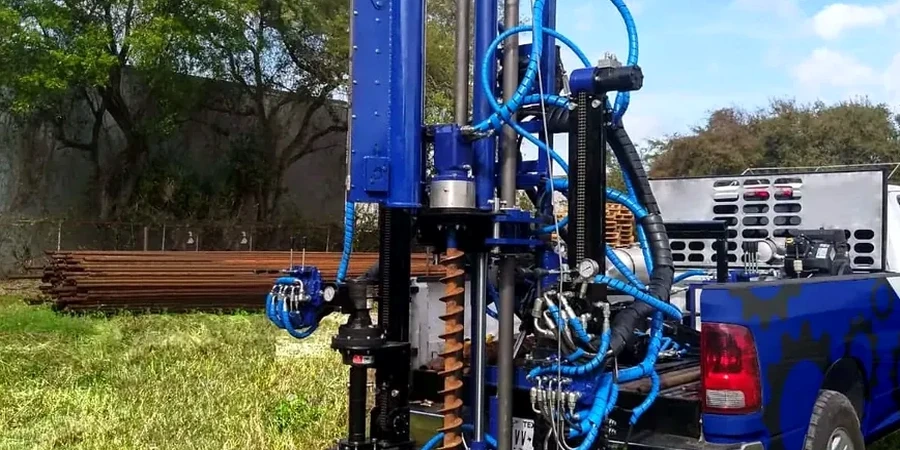
Local geotechnical conditions in Springfield Illinois
Around the Springfield Moraine and the older Illinoian till plains, we frequently encounter a condition that surprises engineers unfamiliar with the region: a dense, gravelly till layer at depths as shallow as 8 to 12 feet that refuses the split spoon after only a few inches of penetration. Contractors bid foundation excavation assuming uniform silty clay, then hit compacted diamicton that rips through budget and schedule. The SPT test catches this transition early—a sudden jump from N-values in the 8–15 range to refusal above 50 blows per foot signals the till contact unambiguously. Overlooking this interface during a desk study or relying solely on regional geologic maps without site-specific SPT drilling leads to change orders, helical pile extensions, and angry phone calls. The IBC requires liquefaction assessment for seismic design category D sites in Illinois, and Springfield's proximity to the New Madrid Seismic Zone means that SPT-based liquefaction triggering analysis using the Seed-Idriss simplified procedure is not optional—it is the minimum standard for public safety.
Our services
SPT drilling in Springfield provides the baseline data for foundation engineering, but the borehole program is only the first step. Our laboratory and field activities support the full design lifecycle.
Foundation Design Support
SPT N-values feed directly into bearing capacity calculations for shallow footings and deep pile design, correlated with local Springfield till and loess properties per IBC requirements.
Liquefaction Screening
Using SPT blow counts and fines content from the Springfield loess, we run Seed-Idriss simplified procedure analysis for seismic design category D compliance under ASCE 7.
Questions and answers
How much does an SPT test cost in Springfield IL?
For a standard SPT borehole in the Springfield area, the cost typically ranges from US$600 to US$680 per hole, depending on depth, access conditions, and the number of samples required. This includes drilling with an automatic trip hammer, split-spoon sampling at 5-foot intervals, sample logging per ASTM D2487, and a summary log with N-values. Projects requiring deeper drilling into glacial till, multiple borings, or additional laboratory testing will adjust the final figure. We always offer a written quote after reviewing the site address and the intended foundation type.
How does the SPT test relate to the New Madrid Seismic Zone?
Springfield sits within the influence zone of the New Madrid Seismic Zone, and the IBC classifies much of Illinois as seismic design category C or D depending on site class. The SPT test generates the N-values needed to calculate the site's soil profile type per ASCE 7, and those same blow counts—combined with fines content from the split-spoon sample—are the input for liquefaction triggering analysis using the Seed-Idriss simplified procedure. Without site-specific SPT data, the structural engineer must assume a conservative site class that can add significant cost to the seismic design.
How deep does an SPT borehole need to go in Springfield's soil?
Borehole depth depends on the foundation type and the structure's load, but in Springfield's typical geology—Peoria Silt over Illinoian till—we generally drill to at least 20 to 30 feet for shallow foundation investigations. If the project involves deep foundations or the borehole encounters the dense glacial till contact earlier, we extend the hole until we have at least 10 feet of N-values in the bearing stratum or reach practical refusal. The IBC requires borings to extend through all unsuitable bearing strata and into competent material; we coordinate the final depth with the project geotechnical engineer during the field program. More info.