Springfield sits on a mantle of glacial till and loess deposited during the Wisconsin glaciation, with the underlying bedrock dominated by Pennsylvanian-age shale and limestone. The upper five to eight feet of subgrade across much of Sangamon County consists of low-plasticity silts (ML) and lean clays (CL) that are highly sensitive to moisture fluctuations. Anyone who has driven I-55 after a wet spring knows how quickly pavement distress appears when the subgrade is not properly characterized. A sound flexible pavement design starts well below the asphalt layer—in the soil that carries every axle load transferred through the base and subbase. Our team runs the laboratory compaction curves, resilient modulus estimates, and CBR suites that feed directly into the AASHTO 1993 and MEPDG design procedures so the pavement cross-section you specify in Springfield actually performs for its design life.
Pavement fails from the bottom up—our job is to make sure the subgrade never becomes the weakest link in the structural section.
Service characteristics in Springfield Illinois
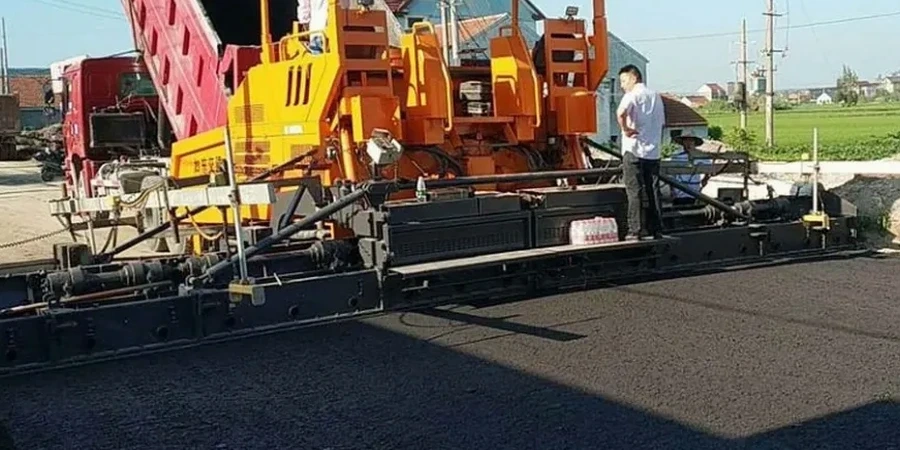
Local geotechnical conditions in Springfield Illinois
Central Illinois gets about 38 inches of precipitation annually, with a pronounced wet cycle from March through June that saturates the upper subgrade right when aggregate haul trucks are running at maximum weight. That combination—heavy construction traffic on a moisture-weakened formation—is the number one cause of premature subgrade rutting we see in Springfield flexible pavement projects. The freeze-thaw window adds another dimension: ice lenses can segregate in the silty subgrade during January cold snaps, and when they melt in late February the upper 12 to 18 inches temporarily lose bearing capacity. A design that ignores this seasonal strength loss will show longitudinal cracking along the wheel paths within the first three winters. We address the risk head-on by specifying the spring-thaw subgrade modulus reduction factor in the structural number calculation and by recommending underdrain systems where the water table stays within five feet of the subgrade surface. For commercial parking lots that see frequent start-stop truck movements, we often push for a geogrid-reinforced base layer that distributes shear stress more evenly and extends the fatigue life of the asphalt concrete beyond what a conventional section would deliver.
Our services
Every flexible pavement project in Springfield moves through three distinct geotechnical phases, and we support all of them with in-house laboratory and field capability.
Subgrade Investigation and CBR Testing
We drill and sample the alignment at 200- to 500-foot intervals, run soaked CBR and Proctor curves on each soil unit, and deliver a profile of design strength values that the civil engineer plugs directly into the structural number equation. For IDOT-funded work, the reports follow the format required by the Bureau of Materials so the review process moves without delay.
Pavement Rehabilitation Forensic Analysis
When an existing Springfield parking lot or street shows premature fatigue cracking, we core the asphalt, trench the base, and dynamic cone penetrometer-test the subgrade to isolate whether the failure is in the mix, the aggregate base, or the soil below. That diagnosis dictates whether the fix is a mill-and-overlay, full-depth reclamation, or a subgrade stabilization strategy.
Questions and answers
What is the typical cost for a flexible pavement geotechnical investigation in Springfield?
For a commercial lot or a short collector street segment in the Springfield area, the investigation and laboratory program generally runs between US$1,900 and US$5,800, depending on the number of borings, the depth of sampling, and whether resilient modulus or cyclic triaxial testing is required. A small parking lot with three borings and basic CBR plus Proctor work stays at the lower end, while a roadway alignment requiring Shelby tube sampling and repeated load triaxial at multiple horizons moves toward the upper end.
How deep do you investigate for a flexible pavement design?
We typically sample to a depth of at least four feet below the proposed subgrade elevation, which in Springfield means total boring depths of six to ten feet depending on the finished grade. The objective is to capture the full zone of stress influence, which per Boussinesq theory extends about two and a half times the loaded radius for a standard dual-wheel assembly. Where frost depth governs, we ensure the investigation reaches at least 12 inches below the maximum frost penetration line identified by IDOT.
What soil parameters matter most for asphalt pavement design?
The critical inputs are the resilient modulus of the subgrade, the California Bearing Ratio under soaked conditions, and the moisture-density relationship from the modified Proctor test. In Springfield’s silty subgrades, the resilient modulus can drop by 40 to 60 percent between optimum moisture and saturation, so we always run the CBR on samples that have been soaked for 96 hours to simulate the worst-case spring condition.
Does Springfield's freeze-thaw cycle really affect pavement life?
Absolutely. The silty loess and till common across Sangamon County are frost-susceptible soils that can heave during prolonged cold periods and lose significant bearing capacity during the thaw. We incorporate a seasonal modulus reduction factor into the structural design, and for high-traffic arterials we often specify a granular subbase thick enough to act as a capillary break and frost protection layer, reducing the risk of differential heave and spring breakup. More info.